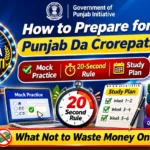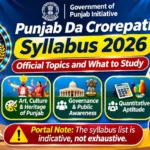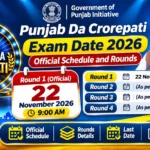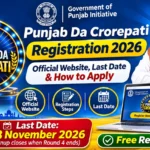
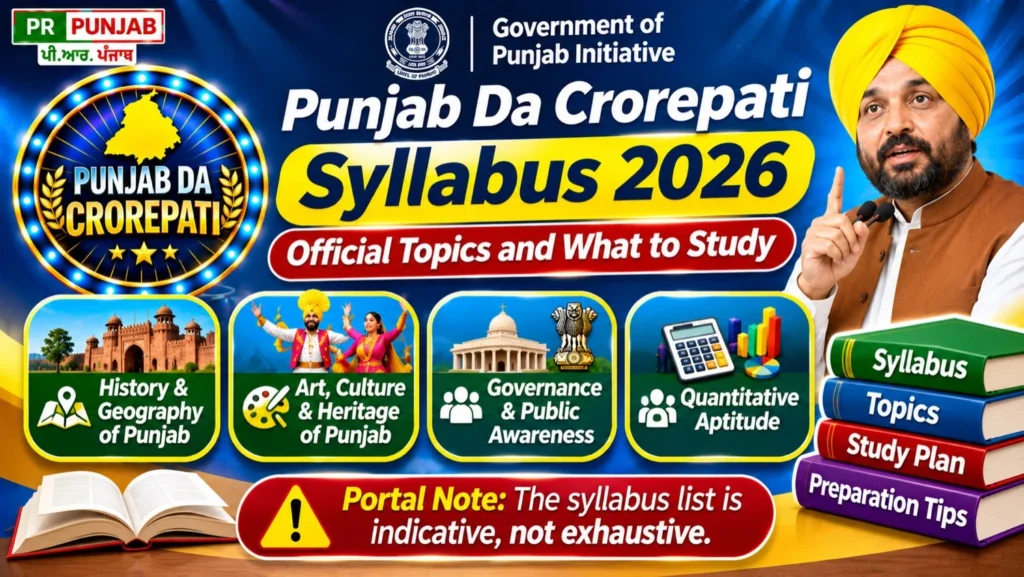
Quick answer: The official Punjab Da Crorepati syllabus, as listed on the portal, covers four subject areas: History and Geography; Art, Culture and Heritage; Governance and Public Awareness; and Quantitative Aptitude. The official wording is important: “Please note that the topics mentioned above are purely indicative and are not exhaustive.” Questions can therefore go beyond this list. Aptitude questions are described as simple, everyday calculations, meant to be solved in 20 seconds without a calculator. This page quotes the official topics and then turns each heading into a practical study map. That study map is PRPunjab’s guidance, not an official book list or a leaked question bank. Always confirm the current syllabus on punjabdacrorepati.punjab.gov.in.
Indicative, not exhaustive. The official portal says the topics below are “purely indicative and are not exhaustive.” Use them as the core of your revision, then leave room for related Punjab facts, schemes and current developments. Nobody outside the government has published an official, complete list of questions. Do not pay for a “full 50,000-question bank.” The figure of about 50,000 questions comes from the Chief Minister’s launch announcement, as reported by news organisations; it is not printed as a syllabus document on the official portal.
For how to use this list under the 20-second rule and the compulsory mock round, see the Punjab Da Crorepati preparation guide. For registration and the official exam dates, see the Punjab Da Crorepati registration guide and the Punjab Da Crorepati exam date and official schedule. The full prize list and quiz rules are in our Punjab Da Crorepati 2026 main guide.
Table of Contents
Official Punjab Da Crorepati Syllabus at a Glance
| Official subject | Topics listed on the official portal |
|---|---|
| History and Geography | Teachings of the Sikh Gurus and the Khalsa; Sufi and Bhakti saints; Maharaja Ranjit Singh; the Ghadar movement; Jallianwala Bagh; freedom fighters; Partition; the Green Revolution; Punjab’s rivers, land and geography |
| Art, Culture and Heritage | Punjabi language and literature; folk music; Bhangra and Giddha; festivals such as Lohri, Baisakhi and Teeyan; heritage sites; crafts; food; traditional architecture; gurdwaras; folk art forms; sporting heroes who made Punjab proud |
| Governance and Public Awareness | Vidhan Sabha; socio-cultural-religious and economic demography; state and district administration; judiciary; state helplines; named governance schemes (listed in full below); sports achievements; Kheda Vatan; doorstep delivery of services; Business Classes in schools and colleges; anti-sacrilege law; 300 units electricity; Youth Nasha Virudh; Ashirwad scheme; Punjab’s rivers and river systems; water-sharing arrangements and treaties; geographical features and natural resources; and “other matters of contemporary relevance to Punjab” |
| Quantitative Aptitude | Addition, subtraction, multiplication, division, percentages, ratios, averages, profit and loss, simple interest, time and distance, number series, and basic data interpretation. Official note: questions will be simple, based on everyday calculations, and designed to be solved within 20 seconds without a calculator |
How to Use This Study Map
The study prompts below are PRPunjab’s own revision guidance, built only from the official headings. They are not official instructions and they are not a question paper. The aim is to help you revise the named topics in a sensible order, at the speed the quiz actually uses. If a fact is not on the official list, we say so.
- Start with the official headings, not with random “GK PDFs” sold on WhatsApp.
- For history, culture and geography, school-level Punjab and Social Studies material (for example PSEB books for Classes 6–10) is a practical base. That book suggestion is ours, not an official reading list — the portal does not name textbooks.
- For schemes and administration, use official Punjab government websites and press notes, so names and facts stay current.
- For timed practice, use the official mock in the app, then our 100+ ਪੰਜਾਬੀ GK ਸਵਾਲ-ਉੱਤਰ list for extra Punjab questions in Punjabi.
History and Geography: What to Study
The official portal groups this area as follows: from the teachings of the Sikh Gurus and the Khalsa to the Sufi and Bhakti saints, Maharaja Ranjit Singh, the Ghadar movement, Jallianwala Bagh, freedom fighters, Partition and the Green Revolution, along with Punjab’s rivers, land and geography.
Sikh Gurus and the Khalsa
Revise the ten Sikh Gurus in order, the founding of the Khalsa in 1699 under Guru Gobind Singh, and the main teachings associated with the Gurus and the Khalsa. Keep to well-established facts: names, places, and what each Guru is commonly remembered for. This is standard Punjab school history, not a secret paper.
Sufi and Bhakti saints
The official heading is broad. Prepare the saints most closely tied to Punjab’s religious and literary memory — for example Baba Farid, and other Bhakti and Sufi figures commonly taught in Punjab textbooks — including where they lived and how their verses entered Punjabi culture. Do not treat any unofficial “50-name list” as official syllabus.
Maharaja Ranjit Singh
Revise the rise of the Sikh Empire, Ranjit Singh’s capture of Lahore (1799), the broad extent of his rule, and well-known features of his administration, army and court. Include the leading generals and the later end of the empire only at a general-knowledge level, unless you are already studying this in more depth.
Ghadar movement, Jallianwala Bagh, freedom fighters and Partition
Cover the Ghadar movement (its overseas origins and its aim in Punjab), the Jallianwala Bagh massacre in Amritsar on 13 April 1919, and the well-known freedom fighters taught in Punjab textbooks. For Partition, revise 1947, the division of Punjab, and the human and geographic consequences at a clear, factual level — dates, places and outcomes, not speculation.
The Green Revolution, rivers, land and geography
Revise why the Green Revolution is associated with Punjab (high-yield varieties, irrigation, wheat and rice, and the later debate on water and soil). For geography, learn Punjab’s location, its 23 districts at a basic level, the doab pattern, major cities, crops, and the rivers that define the land. The official Governance section also returns to rivers, water-sharing arrangements and natural resources, so it is worth revising those carefully once and then reviewing them again under public-awareness headings.
Art, Culture and Heritage: What to Study
The official portal lists Punjabi language and literature, folk music, Bhangra and Giddha, festivals such as Lohri, Baisakhi and Teeyan, heritage sites, crafts, food, traditional architecture, gurdwaras, folk art forms, and the sporting heroes who made Punjab proud. One shorter official wording omits the middle three (traditional architecture, gurdwaras, folk art forms); the fuller official list includes them. Revise the fuller list.
- Language and literature: the Gurmukhi script, well-known Punjabi poets and writers taught in school (for example Waris Shah, Bulleh Shah, Amrita Pritam, Shiv Kumar Batalvi, and other standard names), and the idea of Punjabi as the state’s language. This is a study prompt, not a closed official author list.
- Folk music, dance and art: Bhangra and Giddha, common folk instruments, and folk art forms and crafts (phulkari, for example) as they appear in standard Punjab culture lessons.
- Festivals: Lohri, Baisakhi and Teeyan, as named on the portal, plus the basic seasonal and cultural meaning of each. Because the syllabus is indicative, a general awareness of other widely celebrated Punjab festivals is also sensible, without pretending they were all named officially.
- Heritage, architecture and gurdwaras: major heritage sites and gurdwaras that a well-prepared Punjab student would already know, and the idea of traditional Punjabi architecture. Use established facts (location, associated Guru or event) rather than trivia lists of uncertain origin.
- Food and sport: everyday Punjabi food culture at a general-knowledge level, and sporting heroes widely associated with Punjab (athletics, hockey, kabaddi, wrestling and other sports in which Punjab has a public record). The official text does not name individual athletes, so do not treat a random “top 10” graphic as official.
Governance and Public Awareness: What to Study
This is the widest official heading, and it is where many participants will under-prepare. The portal asks you to know how the state works: the Vidhan Sabha, the socio-cultural-religious and economic demography of the state, the structure and operations of state and district administration, the judiciary, and state helplines.
Revise, at a clear factual level: that Punjab has a Vidhan Sabha and a Council of Ministers, that the state is divided into districts (23), and how district administration is generally organised (Deputy Commissioner and related offices). Learn the well-known state helplines actually published by the government — including the competition’s own helpline 1100, which is listed on the official Punjab Da Crorepati portal — rather than unofficial number lists circulated on chat groups.
Schemes and initiatives named on the official portal
The official syllabus names these governance schemes and initiatives (spellings as they appear on the portal): Mawa Dheeya Satkar Yojana Scheme, Tirath Yatra Scheme, schemes related to farmers, Meri Rasoi, Farishte Scheme, Sadak Surakhya force, Schools of Eminence, education and learning outcomes performance, Aam Aadmi Clinics, Mukh Mantri Sehat Beema Yojana, sports achievements, Kheda Vatan, doorstep delivery of services, Business Classes in schools and colleges, anti-sacrilege law, 300 units electricity, Youth Nasha Virudh, and the Ashirwad scheme. The official sentence ends with “etc.”
For each named item, learn the official purpose and the group it is meant to help, from a Punjab government website or press note — not from a coaching flyer. Because the list ends with “etc.” and the whole syllabus is indicative, a new or related state scheme could also appear. Keep a short, dated notebook of major Punjab government announcements rather than memorising unofficial compilations.
Rivers, water-sharing, resources and “contemporary relevance”
Under this same official heading, the portal also lists Punjab’s rivers and river systems; water-sharing arrangements and treaties concerning Punjab; geographical features and natural resources of the state; and “other matters of contemporary relevance to Punjab.” That last phrase is the official opening for current affairs linked to Punjab — the portal does not publish a separate current-affairs syllabus or a cut-off date. Revise major, verifiable developments in the state, and do not guess from unsourced WhatsApp forwards.
Quantitative Aptitude: What to Practise
The official portal lists basic mathematics: addition, subtraction, multiplication, division, percentages, ratios, averages, profit and loss, simple interest, time and distance, number series, and basic data interpretation, “etc.” It then says the questions will be simple, based on everyday calculations, and designed to be solved within 20 seconds without a calculator.
That official note should shape your practice. You do not need advanced exam mathematics. You do need speed. Practise each named topic with a 20-second timer, on paper or in your head, with the calculator put away. Number series and basic tables or charts (data interpretation) should get the same timed treatment. The “etc.” means a simple, related arithmetic question could still appear. The official FAQ also says you get 20 seconds per question in the online rounds, unless a specific question says otherwise.
What the Official Syllabus Does Not Give You
- No official textbook list or chapter-wise breakdown.
- No official downloadable question bank on the pages we checked.
- No official statement on the portal itself that the quiz will use “50,000 questions.” That figure was given at the launch by the Chief Minister and reported in the press. Treat it as a description of the bank’s size, not as something you can buy.
- No official list of individual books, athletes, saints or scheme FAQs beyond the headings quoted above.
- The Chief Minister also said the questions would follow the pattern of state recruitment exams such as Constable, Patwari and PCS. That is a launch statement, reported by news organisations including The Tribune; it is useful practice advice, but it is not a second official syllabus on the portal.
If someone sells you a “complete official syllabus PDF” or a “guaranteed” question set, it is not from the official portal. Registration and the official mock are free. Details are in the Punjab Da Crorepati preparation guide and the Punjab Da Crorepati registration guide.
ਪੰਜਾਬ ਦਾ ਕਰੋੜਪਤੀ ਸਿਲੇਬਸ: ਪੰਜਾਬੀ ਵਿੱਚ ਸੰਖੇਪ
ਅਧਿਕਾਰਤ ਪੋਰਟਲ ’ਤੇ ਪੰਜਾਬ ਦਾ ਕਰੋੜਪਤੀ ਦਾ ਸਿਲੇਬਸ ਚਾਰ ਭਾਗਾਂ ਵਿੱਚ ਦਿੱਤਾ ਗਿਆ ਹੈ: ਇਤਿਹਾਸ ਅਤੇ ਭੂਗੋਲ; ਕਲਾ, ਸੱਭਿਆਚਾਰ ਅਤੇ ਵਿਰਾਸਤ; ਸ਼ਾਸਨ ਅਤੇ ਜਨਤਕ ਜਾਗਰੂਕਤਾ; ਅਤੇ ਗਣਿਤੀਯ ਯੋਗਤਾ (Quantitative Aptitude)। ਪੋਰਟਲ ਸਾਫ਼ ਲਿਖਦਾ ਹੈ ਕਿ ਇਹ ਵਿਸ਼ੇ ਸਿਰਫ਼ ਸੰਕੇਤਕ ਹਨ ਅਤੇ ਪੂਰਨ (exhaustive) ਨਹੀਂ ਹਨ, ਇਸ ਲਈ ਸਵਾਲ ਇਸ ਸੂਚੀ ਤੋਂ ਅੱਗੇ ਵੀ ਜਾ ਸਕਦੇ ਹਨ। ਗਣਿਤ ਦੇ ਸਵਾਲ ਸਧਾਰਣ ਹੋਣਗੇ ਅਤੇ 20 ਸਕਿੰਟਾਂ ਵਿੱਚ, ਕੈਲਕੁਲੇਟਰ ਤੋਂ ਬਿਨਾਂ, ਹੱਲ ਹੋਣ ਵਾਲੇ ਹੋਣਗੇ। ਅਧਿਕਾਰਤ ਵਿਸ਼ਿਆਂ ਦੀ ਤਿਆਰੀ ਕਰੋ, ਮੌਕ ਅਭਿਆਸ ਰਾਊਂਡ ਲਾਜ਼ਮੀ ਪੂਰਾ ਕਰੋ, ਅਤੇ ਨਕਲੀ “ਸੰਪੂਰਨ ਸਵਾਲ-ਬੈਂਕ” ਖਰੀਦਣ ਤੋਂ ਬਚੋ। ਵੇਰਵੇ punjabdacrorepati.punjab.gov.in ’ਤੇ ਵੇਖੋ।
Frequently Asked Questions
Punjab Da Crorepati syllabus kya hai?
The official portal lists four areas: History and Geography; Art, Culture and Heritage; Governance and Public Awareness; and Quantitative Aptitude. The named topics under each heading are quoted in the table above. The portal says this list is purely indicative and is not exhaustive.
ਪੰਜਾਬ ਦਾ ਕਰੋੜਪਤੀ ਸਿਲੇਬਸ ਕੀ ਹੈ?
ਅਧਿਕਾਰਤ ਪੋਰਟਲ ’ਤੇ ਚਾਰ ਭਾਗ ਹਨ: ਇਤਿਹਾਸ ਅਤੇ ਭੂਗੋਲ; ਕਲਾ, ਸੱਭਿਆਚਾਰ ਅਤੇ ਵਿਰਾਸਤ; ਸ਼ਾਸਨ ਅਤੇ ਜਨਤਕ ਜਾਗਰੂਕਤਾ; ਅਤੇ ਗਣਿਤੀਯ ਯੋਗਤਾ। ਪੋਰਟਲ ਅਨੁਸਾਰ ਇਹ ਵਿਸ਼ੇ ਸਿਰਫ਼ ਸੰਕੇਤਕ ਹਨ, ਪੂਰਨ ਨਹੀਂ।
Kya syllabus complete hai ya indicative?
It is indicative. The official English wording is: “Please note that the topics mentioned above are purely indicative and are not exhaustive.” Questions can go beyond the printed list.
History aur geography mein kya padhna hai?
The official heading covers the Sikh Gurus and the Khalsa, Sufi and Bhakti saints, Maharaja Ranjit Singh, the Ghadar movement, Jallianwala Bagh, freedom fighters, Partition, the Green Revolution, and Punjab’s rivers, land and geography. The Governance section also returns to rivers, water-sharing and natural resources.
Governance schemes kaun si official list mein hain?
The portal names Mawa Dheeya Satkar Yojana Scheme, Tirath Yatra Scheme, schemes related to farmers, Meri Rasoi, Farishte Scheme, Sadak Surakhya force, Schools of Eminence, education and learning outcomes, Aam Aadmi Clinics, Mukh Mantri Sehat Beema Yojana, sports achievements, Kheda Vatan, doorstep delivery of services, Business Classes in schools and colleges, anti-sacrilege law, 300 units electricity, Youth Nasha Virudh and the Ashirwad scheme, ending with “etc.”
Quantitative aptitude kitna hard hai?
The official portal says the questions will be simple, based on everyday calculations, and designed to be solved within 20 seconds without a calculator. The listed topics are basic arithmetic, percentages, ratios, averages, profit and loss, simple interest, time and distance, number series and basic data interpretation.
Punjab Da Crorepati ki official book list hai kya?
No. The official portal does not name textbooks. School-level Punjab Social Studies and Punjabi books, official government pages for schemes, the official mock in the app, and careful timed practice are practical starting points, but they are not an official reading list.
50,000 questions ka official syllabus kahan milega?
It is not published as a downloadable official question bank on the portal pages we checked. The figure of about 50,000 questions comes from the Chief Minister’s launch announcement, as reported in the press. Anyone selling a “complete official bank” is not an official source.
Current affairs syllabus mein hain kya?
The official Governance heading includes “other matters of contemporary relevance to Punjab.” There is no separate official current-affairs paper or cut-off date on the portal. Revise major, verifiable Punjab developments, and ignore unsourced forwards.
Syllabus ke baad preparation kaise karein?
Finish the official Mock Practice Round in the app, practise the aptitude topics against a 20-second timer, and revise the official headings in short daily sessions. A step-by-step plan is in our Punjab Da Crorepati preparation guide. Register first, if you have not already, and check the official exam dates.
Sources
Official portal, Department of Higher Education and Languages, Punjab: punjabdacrorepati.punjab.gov.in (syllabus headings, the “indicative, not exhaustive” note, aptitude timing, mock-round rule and 20-second FAQ).
The Tribune and PTI / News18 reports of the Chief Minister’s launch remarks on the size of the question bank and the recruitment-exam pattern. Those points are not printed as a syllabus document on the official portal.
PRPunjab.in is not affiliated with the Government of Punjab. The study map on this page is our revision guidance, based on official headings. Always confirm the current syllabus on the official portal or app. Last updated: 17 November 2026.